Unwind in Srinagar in autumn with this immersive day guide: Dawn shikara rides across Dal Lake autumn Chinar reflections, mid-morning autumn walks Mughal Gardens Chinar through terraced wonders like Nishat and Shalimar, afternoon explorations of Srinagar autumn lakes including Nigeen and Hazratbal, and a golden-hour sunset picnic Nishat Shalimar Bagh autumn. Discover why Srinagar city of lakes autumn offers the ultimate peaceful escape for nature enthusiasts in Kashmir autumn—featuring 2025 tips on Harud harvests, eco-trails, packing essentials, and budget breakdowns (₹2,500-4,000/day).
By Kashmir Nirvana • kashmirnirvana@gmail.com • Role: author•2025-11-05•
srinagar in autumnsrinagar autumn lakesdal lake autumn chinarautumn walks mughal gardens chinar
Srinagar in Autumn: Lakes, Gardens, and Golden Chinar Magic
Imagine stepping out into a
Srinagar morning during autumn, where the air carries a gentle chill and the
first rays of sunlight filter through a light mist over the lakes. The Chinar
trees, with their broad leaves turning shades of deep crimson and warm gold,
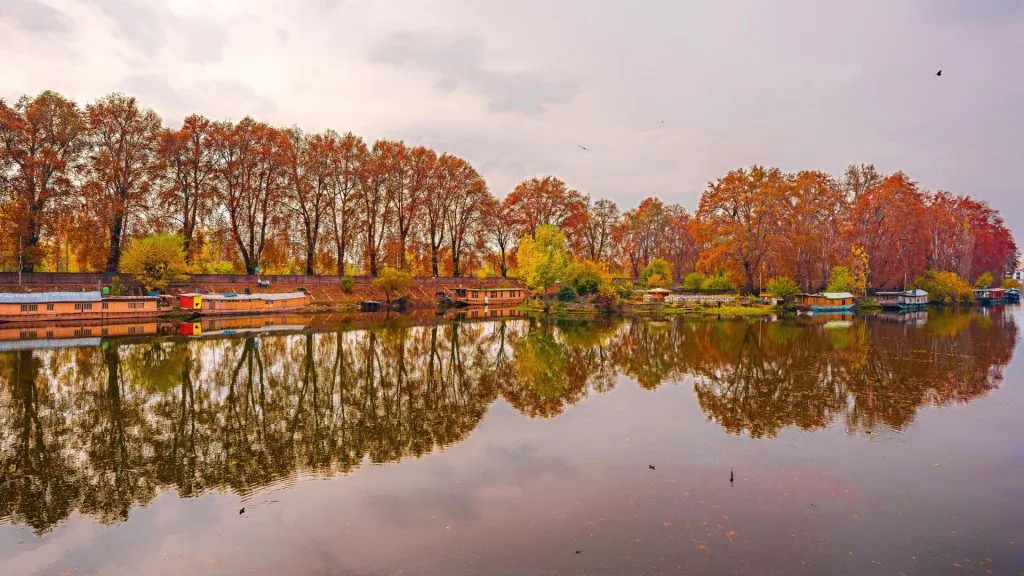
drop softly onto the water's surface, creating small ripples that catch the eye
like scattered jewels. This is the essence of Srinagar in autumn—a city that
transforms into a serene, colorful haven, far removed from the lively chaos of
summer. Known as the city of lakes, Srinagar reveals its most poetic side in
this season, blending natural beauty with a quiet cultural rhythm that invites
visitors to slow down and truly absorb the surroundings.
In autumn, or Harud as locals call it, the valley comes alive with the scents of ripening apples from nearby orchards and the subtle spice of blooming saffron fields. Temperatures hover comfortably between 8 and 18 degrees Celsius during the day, offering just enough coolness to make a warm cup of kahwa tea feel like a small luxury. Nights bring a deeper chill, but it's the kind that wraps you in a cozy pheran shawl, encouraging evenings by a wood-fired heater with stories from the day's explorations. As of November 5, 2025, Srinagar stands as an ideal peaceful escape for nature enthusiasts in Kashmir autumn, with enhanced eco-friendly trails and fewer tourists allowing for intimate encounters with the landscape. The city's lakes shimmer under the golden light, while the historic Mughal Gardens become living canvases of falling leaves, drawing those who seek tranquility amid vibrant change.
This guide weaves together a narrative of a single, unforgettable day in Srinagar during autumn, structured around a flexible itinerary that you can adapt to your pace. We'll start with the misty dawn on Dal Lake, move through leisurely walks in the Mughal Gardens, explore hidden lake pockets in the afternoon, and culminate in a sunset picnic that captures the season's romantic glow. Along the way, I'll highlight key activities, such as a gentle shikara ride amid Dal Lake autumn Chinar reflections or autumn walks Mughal Gardens Chinar paths, ensuring the experience feels both immersive and practical. Whether you're a solo traveler journaling by the water or a couple sharing quiet moments under terraced arches, Srinagar in autumn promises memories that linger like the faint echo of a distant flute. Let's embark on this journey, one golden hour at a time.

Why Srinagar Shines Brightest in Autumn: A Balanced View
Before we launch into the day's
rhythm, it's worth pausing to understand what sets Srinagar in autumn apart
from other seasons. While spring bursts with tulip fields and winter blankets
the city in pristine snow, autumn strikes a harmonious balance—vibrant yet
understated, crowded-free yet full of life. The Chinar trees, native to the
region and revered in Kashmiri folklore, reach their peak display from
mid-October to early November, carpeting paths and waterways in a mosaic of
red, orange, and yellow that rivals any fall destination worldwide. This
natural spectacle coincides with the harvest, infusing the air with earthy
aromas and local markets with fresh produce, from juicy pomegranates to threads
of crimson saffron.
For practical travelers, autumn's appeal extends beyond aesthetics. Visitor numbers drop by about 50 percent compared to peak summer, meaning shorter lines at popular sites and more space to breathe. Accommodation rates fall accordingly—houseboats on Dal Lake, for instance, average ₹4,000 to ₹6,000 per night in October, down from ₹7,000 or more in July. The weather plays its part too, with mostly clear skies and minimal rain, creating ideal conditions for outdoor pursuits without the summer's oppressive heat or winter's icy grip. In 2025, local initiatives like expanded Chinar conservation programs and guided eco-walks have elevated the experience further, ensuring visitors contribute positively while learning about the valley's fragile ecosystem.
Consider this simple comparison
to see the seasonal trade-offs at a glance:
|
Season
Aspect |
Spring
(Tulips) |
Autumn
(Harud) |
Winter
(Snow) |
|
Visual Appeal |
Colorful blooms in orderly beds |
Wild, fiery foliage on trees and water |
Crisp white landscapes with evergreens |
|
Weather Comfort |
Mild 15-25°C, occasional showers |
Crisp 8-18°C, sunny and dry |
Chilly 0-5°C, potential for heavy snow |
|
Activity Fit |
Garden tours, light hikes |
Boat rides, leaf-peeping walks, picnics |
Indoor cultural visits, short snowy strolls |
|
Cost & Crowds |
Moderate crowds, standard rates |
Low crowds, 20-30% discounts |
Variable; roads may close, higher heating costs |
|
Unique Draw |
Floral festivals |
Harvest markets and Chinar lore |
Traditional Kashmiri warmth (wazwan feasts) |
From this overview, autumn emerges as a sweet spot for those craving connection with nature without the extremes. It's particularly suited for peaceful escapes, where the subtle rustle of leaves and the lap of lake water provide a soothing backdrop. With these insights in mind, let's map out your day, blending sensory details with actionable steps to make planning effortless.

Dawn Awakening: Gliding Through Dal Lake Autumn Chinar (7-9 AM)
Your day unfolds at first light,
around 6:30 AM, when the world still holds its breath. Make your way to the
shores of Dal Lake, the undisputed star of Srinagar autumn lakes—a vast expanse
of water that mirrors the surrounding hills and serves as the city's gentle
heartbeat. The mist hangs low, softening the edges of houseboats and turning
the distant Zabarwan Mountains into hazy silhouettes. This early hour captures
the pure magic of Dal Lake autumn Chinar, as overnight breezes have coaxed
countless leaves from the trees, scattering them across the surface like a
natural mosaic.
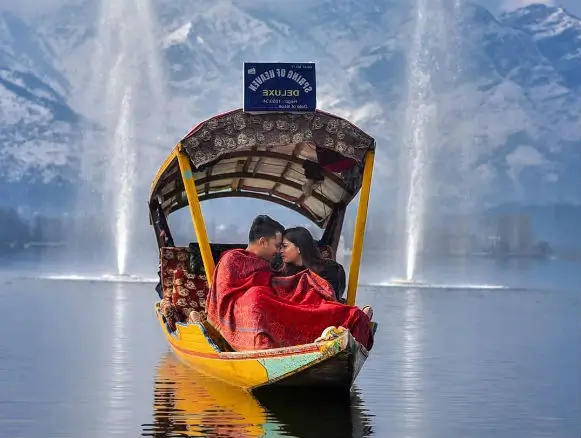
Hail a shikara from one of the ghats along the Boulevard Road—these slender, ornate boats, rowed by skilled locals in traditional pherans, offer the most authentic way to experience the lake. At ₹800 to ₹1,000 for a private hour, it's an affordable indulgence that feels indulgent. Settle onto the cushioned seats as your oarsman pushes off, the wood creaking softly against the water. The rhythm is meditative: dip, pull, glide, repeat. As you venture deeper, the Chinar leaves become the focal point—vibrant reds curling at the edges, golds shimmering in the emerging sunlight, occasionally brushing your hand like a fleeting greeting from the season.
Along the way, the lake reveals its living tapestry. Floating vegetable gardens bob gently, tended by families who harvest greens and herbs right from the water's edge. Your guide might pause to share a tale of Harud traditions, perhaps pointing out a cluster of houseboats where saffron traders once bartered under lantern light. Keep an eye out for the iconic Char Chinar pavilion—an island-like structure with four arched buildings that pierce the mist like ancient sentinels, their reflections doubled in the calm below. If you're inclined toward a touch of whimsy, request a detour to Nigeen Lake's inlet, where the water narrows and willows arch overhead, their yellowing fronds creating a tunnel of light.
To keep things organized, here's
a streamlined checklist for your shikara outing:
·
Prepare Ahead: Arrive by 7 AM; wear layers for
the chill— a light jacket over a sweater works wonders.
·
On the Water: Sip steaming kahwa (₹50 per cup)
from a thermos; snap photos of leaf patterns without disturbing the peace.
·
Engage Locally: Chat with the oarsman about
Chinar folklore—they're often the best storytellers.
·
Duration & Exit: Aim for 45-60 minutes;
disembark at a ghat near the promenade for easy access to breakfast spots.
·
Eco Note: Opt for operators using biodegradable
waste bags, supporting 2025's lake cleanup drives.
By 9 AM, as the sun climbs higher and burns off the last veils of fog, you'll step ashore feeling invigorated, the subtle scent of wet earth and distant woodsmoke clinging to your clothes. A quick stroll along the Boulevard leads to street-side eateries, where you can settle at a low table for breakfast. Order fluffy parathas stuffed with spiced potatoes or cheese, paired with creamy yogurt and perhaps a side of fresh pomegranate seeds—their ruby bursts echoing the Chinar hues (total around ₹150-200). Savor it slowly, watching locals cycle by or vendors arrange their wares, the scene a gentle introduction to the Srinagar city of lakes autumn rhythm.

Midday Harmony: Autumn Walks Mughal Gardens Chinar (9 AM-12 PM)
With the morning's serenity still
fresh, transition to the Mughal Gardens, a short 10-minute auto-rickshaw ride
(₹150) from Dal Lake's edge. These 17th-century wonders, built by emperors
dreaming of paradise, elevate dramatically in autumn, their terraced layouts
becoming stages for the season's leafy drama. Begin at Nishat Bagh, the
"Garden of Joy," where stone pathways wind upward through 12
cascading levels, each framed by fountains that murmur like companions on your
journey.
As you enter, the air thickens
with the earthy perfume of fallen leaves, and the first Chinar you encounter—a
towering sentinel with branches outstretched like welcoming arms—sets the tone
for autumn walks Mughal Gardens Chinar. The paths are wide and shaded, inviting
a leisurely pace as you ascend, pausing at intervals to admire how the sunlight
filters through the canopy, casting dappled patterns on the manicured lawns
below. Midway up, a pavilion offers shaded benches where you might rest, gazing
out over Dal Lake's distant shimmer, the water now alive with midday shikaras
ferrying passengers like tiny figures in a vast painting.
Nishat's design, inspired by
Persian ideals of symmetry and flow, feels alive in this season—the Chinars,
some over two centuries old, drop their bounty in rhythmic flurries, turning
the ground into a soft, multicolored quilt. It's here that the peaceful escape
for nature enthusiasts in Kashmir autumn truly unfolds; the absence of summer's
heat allows for unhurried exploration, perhaps with a journal in hand to note
the way a single leaf spirals downward, defying gravity for a moment before
surrender. Continue to the summit terrace, where panoramic views encompass the
entire garden complex stretching toward the lake, the Zabarwan Hills rising as
a verdant, foliage-flecked backdrop.
A brief hop—5 kilometers by auto
(₹100)—brings you to Shalimar Bagh, the "Abode of Love," which
carries a more intimate, enclosed charm. Its central waterway, lined with
black-marble channels that guide spring-fed streams, becomes a conduit for
floating Chinar leaves, creating impromptu flotillas of color that drift lazily
toward the horizon. Stroll alongside, the water's gentle trickle providing a
soothing underscore to your thoughts, and pause at the Diwan-i-Khas, a raised
pavilion once reserved for royal audiences—now a spot for quiet reflection amid
the rustling branches overhead.
Round out the morning with
Chashme Shahi, just 2 kilometers further, a compact jewel named for its royal
spring. Here, terraced pools overflow with crystal-clear water that cascades
down mossy steps, reflecting the golden orchards that encircle the site. The
spring's mineral-rich flow, said to have healing properties, bubbles forth
eternally, mingling with the autumn palette in a way that feels almost
therapeutic. Entry across all three gardens totals a modest ₹20 each, making
this trio an accessible highlight of Mughal Gardens Srinagar fall.
For easy navigation, consider this timed outline:
·
9-10:30 AM (Nishat): Ascend terraces steadily;
allocate 20 minutes per level for photos and pauses.
·
10:30-11:30 AM (Shalimar): Follow the waterway
loop; linger 15 minutes at each pavilion for historical snippets from signage.
·
11:30 AM-12 PM (Chashme Shahi): Circle the pools
counterclockwise; sample the spring water if inclined (safe and refreshing).
·
Pacing Tip: Total distance 3-4 km; wear
comfortable shoes with good grip for leaf-strewn paths.
· Hydration Break: Carry a reusable bottle—fountain water is potable, but refills at garden cafes cost ₹20.
Noon approaches with a subtle hunger, and the gardens' perimeter teems with dhabas offering authentic Kashmiri fare. Settle at one overlooking the greenery for rogan josh—a tender lamb curry simmered in yogurt and fennel, its aroma weaving through the air like an invitation (₹300-400 with naan). Accompany it with a fresh salad of local greens, perhaps tossed with walnuts from the season's harvest, and a cooling lassi to balance the spices. This meal, rooted in the valley's traditions, nourishes not just the body but the soul, bridging the morning's quiet wonders with the afternoon's unfolding discoveries.

Afternoon Wander: Delving Deeper into Srinagar Autumn Lakes (12-4 PM)
Refreshed from lunch, the
afternoon beckons with opportunities to expand beyond Dal Lake's fame,
uncovering the nuanced layers of Srinagar autumn lakes. A 15-minute auto ride
north (₹200) deposits you at Nigeen Lake, Dal's more reserved counterpart—a
narrower, elongated basin where the water lies so still it mirrors the
encircling willows with flawless precision. In autumn, these trees shed their
summer verdancy for a cascade of yellow fronds that trail into the depths,
creating an illusion of submerged sunlight.
Opt for a pedal shikara here
(₹500 per hour), a hands-on alternative to the rowed variety, where you control
the pace amid the hushed surroundings. The effort is gentle, rewarding you with
the subtle sway of leaves brushing the hull and the occasional glimpse of lotus
pods bobbing like forgotten lanterns. Nigeen's lack of commercial bustle
fosters introspection—perhaps ponder the lake's lore as a favored retreat for
poets, or simply let the mind drift with the foliage.
From Nigeen, a short loop
southward leads to Hazratbal Shrine on Dal's northern fringe, a architectural
gem of white marble that gleams against the autumn sky. The surrounding
promenade, lined with poplars transitioning to buttery tones, invites a
30-minute amble where the lake's expanse opens wide, dotted with distant
houseboats like scattered thoughts. Though primarily a site of spiritual
significance, its waterfront paths blend reverence with natural splendor,
offering shaded benches for quiet observation.
Press on to Badamwari Bagh, the
Almond Garden, a 20-minute cab jaunt east (₹250), where nut-bearing trees
intermingle with Chinars in a fragrant woodland haven. Autumn here is a sensory
feast—the ground littered with husks and leaves in earthy harmony, the air
redolent of toasted almonds from nearby vendors. Wander the 2025-upgraded trails,
which loop through groves with interpretive signs on sustainable harvesting,
plucking a handful of fresh nuts if permitted for an on-the-spot
snack that tastes of the season itself.
Conclude this lake-centric
interlude at the Floating Post Office, a whimsical 2011 addition moored on
Dal's western side—a converted shikara serving as a postal outpost. For ₹20,
select Chinar-embossed stamps and dispatch a postcard, the act a charming nod
to Srinagar city of lakes autumn's blend of tradition and novelty. As the clock
nears 4 PM, the light softens into that anticipatory gold, signaling the pivot
to evening's crescendo.
To streamline your afternoon:
·
12-1:30 PM (Nigeen): Pedal leisurely; focus on
willow reflections for meditative calm.
·
1:30-2:30 PM (Hazratbal): Circuit the shrine
grounds; respect quiet zones with modest dress.
·
2:30-3:30 PM (Badamwari): Follow the 1-km almond
loop; engage with signage for eco-insights.
·
3:30-4 PM (Floating Post Office): Queue briefly;
personalize cards with leaf sketches.
· Mobility Hack: Use ride-sharing apps for seamless hops; total travel under 30 minutes.
These explorations peel back Srinagar autumn lakes' multifaceted allure, from bustling edges to tranquil inlets, each facet enhancing the day's tapestry without overwhelming the senses.

Evening Enchantment: Sunset Picnic at Nishat and Shalimar Bagh Autumn (4-7 PM)
As the afternoon wanes, return to
the Mughal Gardens for the day's luminous finale—a sunset picnic Nishat
Shalimar Bagh autumn that encapsulates the season's romantic essence. Arrive at
Nishat by 4 PM, the sun now casting elongated shadows across the terraces,
igniting the Chinars in a spectrum of ember tones. Secure a vantage on an upper
chabutra, a raised platform ideal for gatherings, and unfurl your picnic amid
the rustling symphony of leaves.
Curate your spread from local
markets earlier in the day, emphasizing Harud's bounty: Warm naan pockets
filled with spiced minced lamb (seekh kebabs, ₹200 for a dozen), creamy
gushtaba meatballs in yogurt gravy (₹150 per portion), and fragrant
saffron-infused rice dotted with pomegranate arils that mimic the foliage's
jewels (₹100). Complement with seasonal fruits—crisp apples from Lidder Valley
orchards and clusters of deep-red grapes—plus a thermos of kehwa to ward off
the encroaching dusk (₹30 per serving). This feast, simple yet soul-satisfying,
harmonizes with the setting, where the air cools just enough to make each bite
a comfort.
As you dine, the light performs
its alchemy: Zabarwan's ridges sharpen against a peach-hued sky, while the lake
below gleams like polished amber. Conversations flow naturally—perhaps sharing
how the gardens' Persian roots echo in the terraced flow, or noting the birds'
evening chorus as hoopoes flit through the branches. The picnic evolves into a
shared reverie, the crunch of leaves underfoot punctuating laughter and quiet
pauses alike.
With sated appetites, amble the 5
kilometers to Shalimar Bagh (₹100 entry post-5 PM), where the gardens take on
an intimate twilight veil. The central waterway guides your steps, leaves
sailing along its course like message-bearing vessels, while fountains provide
a melodic counterpoint to the deepening hush. Recline at the Faiz Bakhsh
pavilion, its arches framing the fading light, and let the evening azan from
nearby mosques weave in, a cultural thread binding nature's spectacle to the
city's spiritual pulse.
For those extending the night,
linger for the gardens' subtle illuminations—soft LEDs that highlight the
Chinar silhouettes without overpowering the stars—or retreat to a Dal houseboat
for candlelit wazwan under the constellations (₹4,000-8,000 nightly). This
ritual, sunset picnic Nishat Shalimar Bagh autumn, distills the day's joys into
a lingering afterglow, a testament to why these spaces endure as timeless
retreats.
Here's a picnic prep checklist to
ensure seamless bliss:
·
Essentials: Picnic cloth, reusable plates
(eco-friendly bamboo sets ₹200), and a small lantern for fading light.
·
Flavor Pairings: Kebabs with mint chutney for
zest; fruits chilled in a lake-side cooler.
·
Ambiance Boost: Play soft Kashmiri folk tunes
via Bluetooth (volume low to honor the quiet).
· Cleanup Vow: Bag all waste—2025's "Zero Trace" campaigns reward compliant picnickers with garden discounts.
·
Group Size: Ideal for 2-6; larger parties book
private terraces via apps (₹500 extra).
Closing Reflections: Tailoring Your Srinagar Autumn Sojourn
As twilight yields to night, your
day in Srinagar in autumn draws to a close, leaving behind a mosaic of moments—the
serene glide of a shikara through Dal Lake autumn Chinar, the contemplative
strides of autumn walks Mughal Gardens Chinar, and the shared warmth of a
sunset picnic Nishat Shalimar Bagh autumn. This itinerary, flexible at its
core, serves as a blueprint rather than a rigid schedule, adaptable for
families (add pony carts at gardens for ₹300) or adventurers (extend with a 2
PM birdwatching tour, ₹800).
Practicalities round out the
picture: Connectivity is reliable via Jio or Airtel SIMs (₹200 for 10GB), with
ATMs plentiful along the Boulevard. For longer stays, boutique guesthouses near
the lakes offer Chinar-view rooms from ₹3,000 nightly, blending modern comforts
with traditional architecture. Safety remains a priority—tourist police patrols
are visible, and apps like Safe Srinagar provide real-time alerts.
Environmentally, embrace the season's ethos by treading lightly: Avoid
single-use plastics, and consider donating to Chinar sapling drives (₹100
plants one tree).
In essence, Srinagar in autumn transcends mere sightseeing; it's an invitation to attune to the valley's subtle symphony, where the lap of water, whisper of leaves, and warmth of hospitality converge. As one recent explorer noted in a glowing review, "Here, autumn doesn't just arrive—it envelops you, turning ordinary days into timeless tales." Whether your heart yearns for the reflective calm of Srinagar autumn lakes or the structured splendor of Mughal Gardens Srinagar fall, this season promises a peaceful escape for nature enthusiasts in Kashmir autumn that resonates long after the leaves settle. What part of your day calls to you most? Share in the comments, and let Srinagar's gold inspire your next chapter.
Unwind in Srinagar in autumn with this immersive day guide: Dawn shikara rides across Dal Lake autumn Chinar reflections, mid-morning autumn walks Mughal Gardens Chinar through terraced wonders like Nishat and Shalimar, afternoon explorations of Srinagar autumn lakes including Nigeen and Hazratbal, and a golden-hour sunset picnic Nishat Shalimar Bagh autumn. Discover why Srinagar city of lakes autumn offers the ultimate peaceful escape for nature enthusiasts in Kashmir autumn—featuring 2025 tips on Harud harvests, eco-trails, packing essentials, and budget breakdowns (₹2,500-4,000/day). From misty mornings to starry evenings, blend serenity with sensory delights in the valley's fiery foliage season. Why visit now? Mild weather, 20-30% savings, and Chinar peaks make it timeless magic.
Frequently Asked Questions (FAQs): Srinagar in Autumn 2025
1. What is the best time to visit Srinagar in autumn 2025?
Mid-October to early November 2025 is ideal for Srinagar in
autumn, when Dal Lake autumn Chinar peaks in crimson-gold hues and Mughal
Gardens burst with foliage. Days are sunny (8-18°C), perfect for walks—avoid
late November's frost for optimal colors and serenity.
2. How do I experience Dal Lake autumn Chinar magic?
Glide on a 1-hour shikara ride (₹800-1,000) at dawn from
Nehru Ghat—leaves float like fiery confetti on misty waters. Spot reflections
near Char Chinar pavilion; pair with kahwa tea for a classic Srinagar autumn
lakes immersion. Book eco-operators via apps for 2025.
3. What are the top Mughal Gardens Srinagar fall highlights?
Mughal Gardens Srinagar fall stars include Nishat Bagh's
terraced Chinar arches, Shalimar's watery leaf flotillas, and Chashme Shahi's
spring-fed pools (₹20 entry each). Ascend Nishat for lake panoramas—prime for
autumn walks Mughal Gardens Chinar in golden light.
4. Why is Srinagar city of lakes autumn a peaceful escape?
Srinagar city of lakes autumn offers 50% fewer crowds than
summer, with misty dawns on Nigeen and Hazratbal's poplar-lined shores creating
quiet havens. Ideal peaceful escape for nature enthusiasts in Kashmir autumn—crisp
air, birdwatching, and Harud harvest vibes without the bustle.
5. What's a perfect day itinerary for Srinagar in autumn?
Start with 7 AM Dal shikara (1 hr), mid-morning autumn walks
Mughal Gardens Chinar (Nishat-Shalimar, 3 hrs), afternoon Nigeen pedal boat +
Badamwari almonds (3 hrs), end with sunset picnic Nishat Shalimar Bagh autumn
(₹400 wazwan). Total: ₹2,500-4,000, 10 km walking.
6. How much does a Srinagar in autumn day trip cost in 2025?
Budget ₹2,500-4,000 for Srinagar in autumn: Shikara ₹800,
gardens ₹60, lunch ₹300, auto rides ₹500, picnic ₹400. Off-peak savings hit
20-30%; add ₹1,000 for guided autumn walks Mughal Gardens Chinar—affordable
peaceful escape for nature enthusiasts in Kashmir autumn.
7. Are Srinagar autumn lakes safe for shikara rides in November 2025?
Yes—Srinagar autumn lakes like Dal and Nigeen are secure
with tourist patrols; as of November 5, 2025, water levels are stable
post-monsoon. Choose licensed operators (₹800/hr) for life vests and calm
routes—enjoy Dal Lake autumn Chinar without worry.
8. What packing essentials for Srinagar city of lakes autumn?
Layer thermals/fleece for 8-18°C swings, waterproof jacket
for mist, comfy shoes for autumn walks Mughal Gardens Chinar (3-4 km), and
camera for foliage. Modest attire for shrines; reusable bottle for eco-trails
in Srinagar city of lakes autumn—light pack for your peaceful nature escape.
9. How to plan a sunset picnic Nishat Shalimar Bagh autumn?
Pack wazwan (kebabs ₹200, saffron rice ₹100) from Boulevard
dhabas; arrive Nishat by 4 PM for terraced spots (₹20 entry). Transition to
Shalimar at dusk for fountain views—total ₹400-600. Golden-hour Chinar glow
makes it a romantic sunset picnic Nishat Shalimar Bagh autumn highlight.
10. Why visit Srinagar in autumn for nature lovers?
Srinagar in autumn delivers peaceful escape for nature enthusiasts in Kashmir autumn with Chinar carpets, misty Srinagar autumn lakes, and harvest scents—less crowded than spring, milder than winter. 2025 eco-walks and foliage apps enhance trails; Harud's calm fosters reflection amid golden magic.
KN